 GTA 6 GUIDE
Location Guide
Port Gellhorn, Ambrosia & Mount Kalaga
The Short Answer
Leonida is more than its capital. Port Gellhorn (Kelly County) is a faded Gulf-coast resort strip; Ambrosia (Leonard County) is sugar-farming country and biker territory; the Grassrivers are the state's Everglades-style wetlands; and Mount Kalaga National Park is its northern forested wilderness.

Port Gellhorn: the strip that time forgot
On Leonida's Gulf coast in Kelly County, Port Gellhorn is Rockstar's portrait of a resort town past its prime: a strip of ageing motels, beach bars and boarded glamour along the water. The trailers use it for a seedier, slower register than Vice City's neon — the Florida of faded postcards. It is the kind of place where a couple trying to disappear might wash up, and where the locals notice strangers.
Ambrosia: sugar, steel and bikers
Inland in Leonard County, Ambrosia is Leonida's industrial farmland — sugar country modelled on the real communities around Lake Okeechobee, where cane fields feed refineries and company towns. Rockstar's official material ties the region to Raul Bautista, the veteran bank robber scouting fresh talent, and to biker culture — a working, dusty counterweight to the coast's gloss.

Grassrivers and Mount Kalaga: the wild Leonida
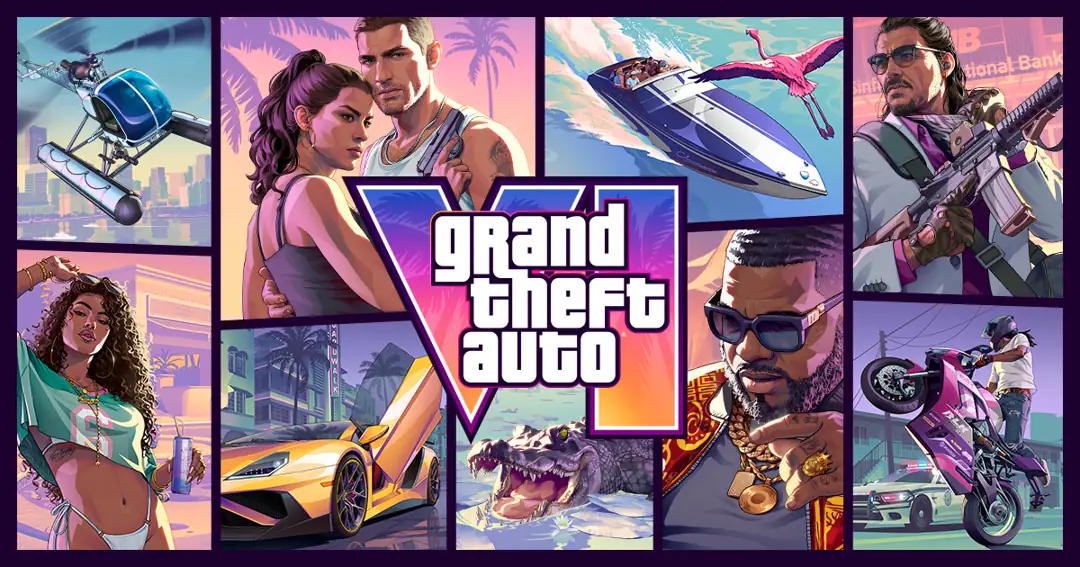
Two regions complete the state. The Grassrivers, in the interior wetlands, are the Everglades translated: sawgrass plains, cypress stands, airboats, alligators and the mud-truck culture the key art's alligator panel nods to. North, Mount Kalaga National Park gives Leonida high, forested ground — pine woods, wildlife and hunting country that feels like a different state entirely. Together they make Leonida a genuine road-trip map rather than a city with scenery attached. The complete region-by-region table is in the map guide.
Why these regions matter
It would have been easy for Rockstar to make GTA VI 'Vice City plus scenery'. Port Gellhorn, Ambrosia, the Grassrivers and Mount Kalaga exist to refuse that: they give the state economic and emotional range. The coast sells pleasure (Port Gellhorn's faded version of it), the interior produces things (Ambrosia's sugar), the swamp hides things (the Grassrivers), and the northern park is where Leonida keeps what is left of the wild. A conspiracy story needs exactly this geography — money, production, hiding places and empty country to run through — and the campaign's state-wide sprawl, promised in Rockstar's own premise, is built on it.
They also carry the game's satire into registers Vice City can't reach: small-town industry, resort decay, swamp culture and park wilderness each get the affectionate-mockery treatment the series applies to American life. Players who only ever saw the neon in trailers will find half the game's personality out here.
The Grassrivers, up close
Of the wild regions, the Grassrivers got the most trailer love — airboats planing through sawgrass, alligators sliding off banks, mud trucks axle-deep at gathering spots. It is Leonida's Everglades with the volume up: a wetland that functions as the state's ungoverned interior, where the rules of the city and the coast stop applying. The key art's alligator panel is its emblem. Expect the region to serve the story as refuge, workplace and hazard in turn — and expect its wildlife to be less predictable than its people.

Two regions, one argument about Florida
Pair Port Gellhorn with Ambrosia and Rockstar's satire sharpens. Port Gellhorn is Florida's sold dream gone stale — the resort coast that time and trend moved past, all faded signage and stubborn locals. Ambrosia is Florida's working reality — the sugar country around the great lake, where the state's sweetness is literally manufactured by people the coast never thinks about. One region sells leisure it can no longer deliver; the other produces wealth it does not keep. Between them they give GTA VI its class geography, the backdrop that makes Vice City's glitter legible as one pole of a whole state's economy.
They also diversify the play space in ways trailers only hinted at: small-town streets instead of avenues, farmland roads instead of freeways, a refinery's industrial geometry instead of marinas. Players who treat the map as 'Vice City plus driving' will miss the design's point — these regions are content, not commute. The remaining two wild regions, the Grassrivers and Mount Kalaga, are covered in the section above and the map guide.
Getting there: the state's road logic
Geography is gameplay in a driving game, and these regions teach the state's road logic. Port Gellhorn sits on the coast road — the strip is a destination you arrive at along the water, the way Florida's own resort towns string along their highways. Ambrosia is inland mileage: causeways over the wetlands' edge, farm roads, and the long straight runs where the map breathes between cities. Together they make the drive between places a designed experience rather than a loading substitute — the trailers' long causeway and highway shots are promises the road network keeps. Players planning a full-state tour should read the map guide's gazetteer with this in mind: Leonida is arranged as a ring of coasts around a wild middle, and both of these regions are best understood as the ring's working-class arc.
The interior in one paragraph
Carry away this summary of Leonida's working half: Port Gellhorn is the coast after the party — a strip of faded resorts holding on by habit — and Ambrosia is the interior that feeds the state, sugar fields and refinery towns where Raul Bautista's generation of criminals learned their trade. Between them, with the Grassrivers' swamp on one side and Mount Kalaga's wild north on the other, they make Leonida a state instead of a backdrop. The story will take you through all of it; this page is the map of why it matters.